
Introduction to Aerial Dominance
The concept of air supremacy remains a cornerstone of modern military strategy and national defense protocols. Fighter jets serve as the primary instruments for establishing control over the skies during conflicts and peacekeeping operations. These high-performance aircraft provide nations with the ability to project power across vast distances without relying on ground-based infrastructure. The psychological impact of air superiority often dictates the outcome of terrestrial battles before ground forces engage the enemy. Strategic planners prioritize the acquisition of advanced tactical aircraft to maintain a deterrent posture against potential adversaries. The ability to strike precision targets deep within hostile territory defines the operational relevance of manned combat aviation. Nations continue to invest billions of dollars into aerospace programs to ensure their air forces remain capable of meeting contemporary threats. The role of the fighter jet extends beyond mere combat duties to include intelligence gathering and reconnaissance missions.
The Evolution of Fighter Generations
Aviation history categorizes tactical aircraft into distinct generations based on technological milestones and performance capabilities. First-generation jets introduced jet propulsion to replace piston engines during the immediate post-World War II era. Second-generation models incorporated supersonic flight capabilities and early air-to-air missile systems for engagement. Third-generation fighters focused on multirole capabilities allowing a single airframe to perform interception and ground attack missions. Fourth-generation platforms brought digital avionics and fly-by-wire control systems to enhance pilot situational awareness. Fifth-generation aircraft currently represent the pinnacle of design with integrated stealth features and network-centric warfare abilities. Each successive generation improved upon speed, range, payload capacity, and survivability in contested environments. The transition from one generation to the next reflects the changing nature of geopolitical threats and technological availability. Modern air forces operate a mix of these generations to balance cost-effectiveness with high-end combat performance.
Stealth and Sensor Fusion Capabilities
Low observable technology defines the fifth-generation fighter and alters the dynamics of detection and engagement. Stealth coatings and airframe shaping reduce the radar cross-section making the aircraft difficult for enemy systems to track. Sensor fusion combines data from radar, infrared search tracks, and electronic warfare suites into a single cohesive display for the pilot. This integration allows the crew to understand the battlespace without needing to process multiple disjointed information streams. Advanced AESA radars provide high-resolution mapping and tracking of multiple targets simultaneously at long ranges. Electronic attack capabilities enable the jet to jam enemy communications and disrupt guidance systems of incoming missiles. The combination of stealth and superior sensing creates a significant advantage over legacy platforms lacking these features. Pilots operating these systems can engage threats before the enemy becomes aware of their presence in the theater. 5th and 6th generation jets now act as “Electronic Attack” platforms. It’s no longer just about hiding from radar (stealth); it’s about blinding the enemy’s radar while remaining silent.
Propulsion and Maneuverability Advances
Jet engine technology has progressed to provide thrust vectoring and supercruise capabilities for modern tactical aircraft. Thrust vectoring nozzles allow the pilot to direct engine exhaust for enhanced agility during close-range dogfights. Supercruise enables the aircraft to sustain supersonic speeds without engaging fuel-intensive afterburner systems. These propulsion advances extend the combat radius and reduce the logistical burden of aerial refueling operations. High thrust-to-weight ratios ensure rapid acceleration and climb rates essential for intercepting hostile bombers or missiles. Materials science contributes to engine durability allowing operation under extreme thermal and mechanical stress conditions. Maintenance protocols for these complex propulsion systems require specialized training and infrastructure support. The performance envelope of modern engines dictates the tactical options available to mission commanders during execution.
The Rise of Unmanned Aerial Systems
Unmanned aerial vehicles present a growing challenge to the traditional dominance of manned fighter jets in specific roles. Loitering munitions and combat drones offer a lower-cost alternative for striking ground targets without risking pilot life. Swarm technology allows multiple unmanned systems to coordinate attacks that could overwhelm traditional air defense networks. Some military doctrines now propose manned-unmanned teaming where jets control groups of autonomous drones. This hybrid approach leverages the decision-making capability of humans with the expendability of machines. Critics argue that drones lack the adaptability of a human pilot in complex and dynamic combat scenarios. The proliferation of cheap drones changes the cost-exchange ratio in favor of the defender in some instances. Air forces must adapt their tactics to counter the threat posed by small and difficult-to-detect unmanned platforms.
Surface-to-Air Missile Threats
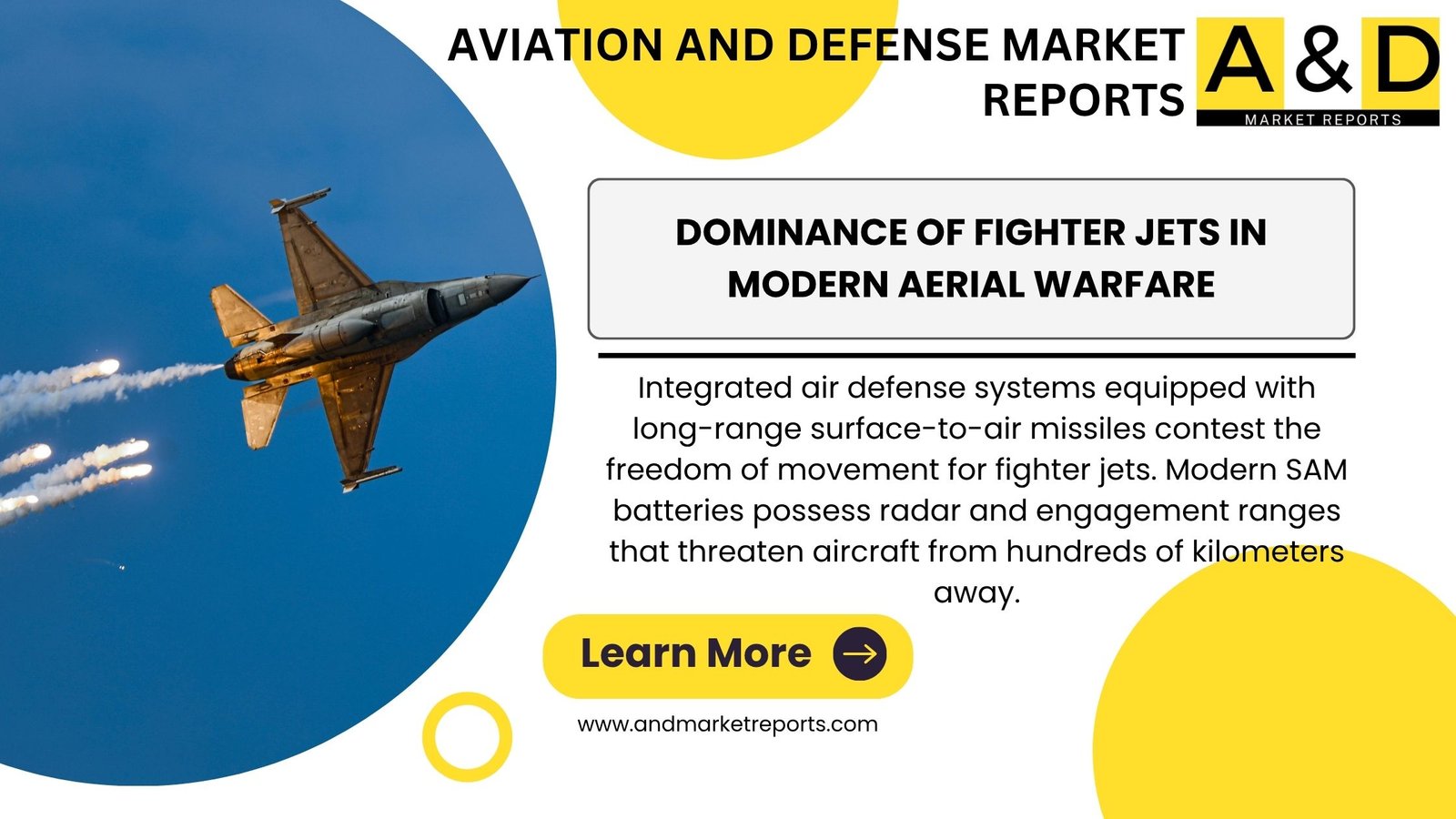
Integrated air defense systems equipped with long-range surface-to-air missiles contest the freedom of movement for fighter jets. Modern SAM batteries possess radar and engagement ranges that threaten aircraft from hundreds of kilometers away. Mobile launchers increase the survivability of these systems making them hard to locate and destroy prior to strikes. Electronic warfare pods on fighter jets attempt to degrade the guidance links of incoming missiles. Suppression of Enemy Air Defenses missions remain a critical prerequisite for establishing air superiority in high-threat environments. The density of air defense networks in certain regions limits the operational effectiveness of non-stealth aircraft. Pilots must rely on standoff weapons to engage targets without entering the lethal envelope of enemy defenses. The evolution of missile technology drives the continuous need for improved countermeasure suites on tactical aircraft.
Annual Global Delivery:
Lockheed Martin delivered 48 F-35 Lightning II jets across all variants in the first quarter of 2026, maintaining production momentum from 191 units in 2025. Dassault Aviation handed over 6 Rafale fighters to various operators by March 2026, building on 26 deliveries the prior year. Russia accepted 2 Su-57 Felons into service early in 2026, with China’s J-20 seeing 18 units delivered
Sixth Generation Development Programs
Research and development efforts are currently underway to define the capabilities of the upcoming sixth generation of combat aircraft. These future platforms will likely emphasize artificial intelligence and autonomous decision-making aids for the flight crew. A 6th-gen fighter isn’t just a plane; it’s a mobile data center. The “NGAD” (Next Generation Air Dominance) and “GCAP” (Global Combat Air Programme) are focusing more on the software architecture than the wings themselves. Directed energy weapons such as lasers may become integrated into the airframe for missile defense and offensive strikes. Connectivity will expand to include space-based assets and cyber warfare domains beyond the atmospheric battlefield. Variable cycle engines are under consideration to optimize fuel efficiency across subsonic and supersonic flight regimes. International collaborations aim to share the immense costs associated with developing these next-generation systems. The timeline for operational deployment extends into the 2030s as technology matures and testing concludes. Strategic planners view these programs as essential for maintaining air dominance in the latter half of the twenty-first century.
Strategic Cost and Maintenance Factors
The financial burden of operating modern fighter jets influences procurement decisions and force structure planning for nations. Hourly operating costs for fifth-generation aircraft exceed those of legacy platforms due to complex stealth maintenance requirements. Supply chain logistics for spare parts must remain robust to ensure high mission availability rates during conflicts. Training programs for pilots and ground crews require significant investment in simulators and specialized instruction facilities. Nations with smaller defense budgets often opt for upgraded fourth-generation jets to balance capability with affordability. Life extension programs allow older airframes to remain serviceable until replacement aircraft become available in sufficient numbers. The total cost of ownership includes fuel, armaments, infrastructure, and personnel salaries over the lifespan of the jet.