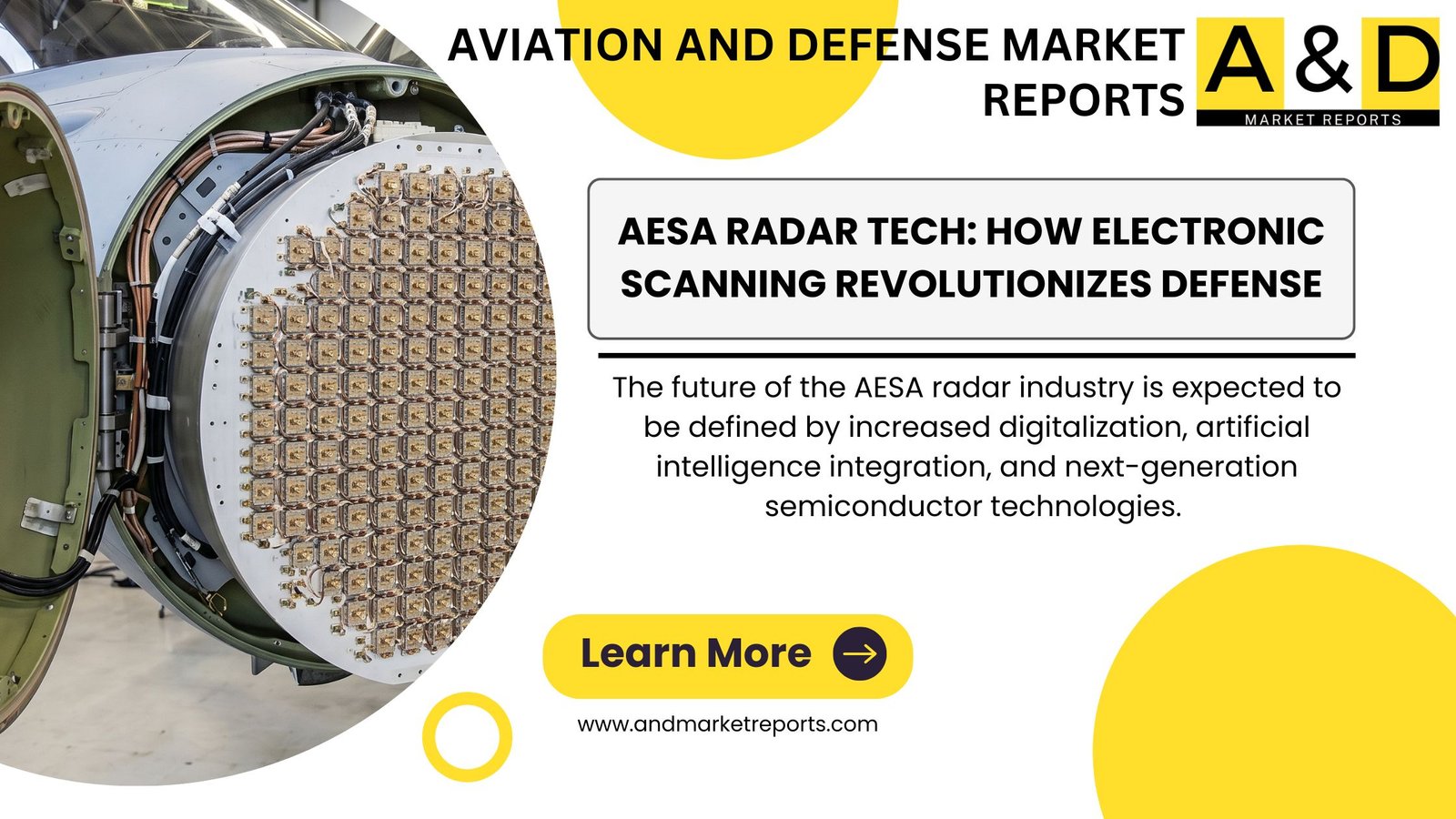

AESA Radar Technology
Active Electronically Scanned Array AESA radar technology has emerged as one of the most significant advancements in modern surveillance, tracking, and targeting systems. Unlike conventional mechanically scanned radars, AESA systems employ numerous transmit/receive modules that electronically steer radar beams without moving antenna components. This capability enables faster target detection, enhanced tracking accuracy, and improved resistance to electronic warfare threats. The increasing demand for advanced situational awareness across military and defense applications has positioned AESA radars as a critical component of modern combat platforms.
Historical Development of AESA Radars
The origins of AESA radar technology can be traced to research programs initiated during the latter half of the twentieth century. Early radar systems relied heavily on mechanically rotating antennas that offered limited tracking flexibility and slower response times. Advances in semiconductor technology, microwave engineering, and signal processing enabled the development of electronically scanned arrays.
Initial AESA deployments were primarily restricted to high-end military aircraft due to the complexity and cost of the technology. Over time, improvements in manufacturing techniques and electronic components facilitated wider adoption across air, land, and naval defense platforms.
Transition from Mechanical to Electronic Scanning
The transition from conventional radar architectures to AESA technology marked a major milestone in defense electronics. Mechanical radars required physical movement to scan large areas, resulting in slower target updates and increased maintenance requirements. AESA systems introduced the ability to redirect radar beams almost instantaneously through electronic control.
This advancement significantly improved target acquisition speed, multi-target tracking capability, and operational reliability. The shift toward electronically scanned radar systems has fundamentally transformed military surveillance and combat operations worldwide.
Present-Day Adoption Across Defense Platforms
Modern armed forces increasingly rely on AESA radars to enhance operational effectiveness across multiple domains. Fighter aircraft, airborne early warning platforms, naval vessels, air defense systems, and ground-based surveillance networks utilize AESA technology to achieve superior detection and tracking performance. The ability to simultaneously conduct search, track, communication, and electronic warfare functions has increased the strategic value of these radar systems. Many countries are incorporating AESA radars into modernization programs aimed at strengthening national defense capabilities and maintaining technological superiority.
Growing Integration in Fighter Aircraft
The fighter aircraft segment represents one of the largest applications for AESA radar technology. Modern combat aircraft require advanced sensors capable of detecting multiple threats at long distances while operating in highly contested environments. AESA radars provide improved target discrimination, greater detection ranges, and enhanced resistance to jamming. The technology also supports advanced weapon guidance and network-centric warfare capabilities. As air forces upgrade existing fleets and procure next-generation fighters, demand for AESA radar systems continues to expand.
Expansion of Naval and Maritime Applications
Naval forces are increasingly integrating AESA radars into warships, destroyers, frigates, and aircraft carriers. Maritime operations require persistent surveillance over vast ocean regions while maintaining the ability to detect aerial, surface, and missile threats simultaneously. AESA technology offers superior tracking accuracy and rapid threat assessment capabilities that enhance fleet defense effectiveness. Modern naval radar systems also support ballistic missile defense missions and contribute to integrated maritime security networks.
Increasing Role in Ground-Based Air Defense Systems
Ground-based air defense systems have become another major area of AESA radar deployment. The evolving threat environment, characterized by advanced aircraft, cruise missiles, drones, and hypersonic weapons, has increased the need for highly responsive radar systems. AESA radars enable continuous monitoring of airspace while providing accurate target tracking data for interception systems. Their ability to detect small and low-observable targets has become particularly valuable in modern integrated air defense architectures.
Advancements in Semiconductor and Module Technologies
Continuous progress in semiconductor materials and transmit/receive module development is driving significant improvements in AESA radar performance. Gallium Nitride and Gallium Arsenide technologies have enhanced power efficiency, thermal management, and operational range. These innovations allow radar systems to deliver stronger signals while reducing overall size and weight. Ongoing research efforts continue to improve reliability, durability, and operational effectiveness across diverse environmental conditions.
Integration with Artificial Intelligence and Data Processing
Artificial intelligence and advanced signal processing technologies are increasingly being integrated into AESA radar systems. Modern radar platforms generate vast amounts of data that require rapid analysis and interpretation. AI-driven algorithms improve target recognition, threat classification, and tracking accuracy while reducing operator workload. The combination of AESA hardware and intelligent software is enabling faster decision-making and enhanced battlefield awareness in complex operational environments.
Export Market for AESA Radars
The international trade of AESA radar systems has expanded significantly as nations seek advanced defense capabilities. Major exporting countries include the United States, France, Israel, United Kingdom, and South Korea. These countries possess sophisticated defense industries capable of producing advanced radar technologies for domestic and international customers.
Export programs often accompany fighter aircraft sales, naval modernization projects, and integrated air defense contracts. The growing demand for advanced surveillance and targeting solutions continues to create opportunities for radar manufacturers in global markets.
Import Trends and International Procurement
Many countries lacking indigenous radar development capabilities depend on imports to strengthen defense readiness. Emerging economies across Asia-Pacific, the Middle East, Eastern Europe, and Latin America are investing heavily in advanced radar systems to modernize military infrastructure. Import programs frequently involve technology transfer agreements, industrial partnerships, and localized manufacturing initiatives.
These arrangements support long-term capability development while ensuring access to advanced radar technologies required for national security objectives.
Market Drivers Supporting Industry Growth
Several factors are driving growth within the AESA radar industry. Rising defense budgets, increasing geopolitical tensions, and military modernization programs are encouraging governments to invest in advanced sensor technologies. The growing need to counter stealth aircraft, unmanned systems, and sophisticated missile threats has further accelerated procurement activities. Technological advancements in semiconductor manufacturing and digital signal processing continue to enhance radar performance, making AESA systems increasingly attractive across multiple defense applications.
Key Restraints Affecting Market Expansion
Despite strong demand, several restraints influence the growth trajectory of the AESA radar market. High development costs, complex manufacturing processes, and stringent regulatory requirements can limit widespread adoption. The production of advanced transmit/receive modules requires specialized expertise and significant investment in research and development.
Budget constraints in some regions may delay procurement programs and reduce acquisition volumes. Additionally, export restrictions and technology control regulations can impact international sales opportunities.
Challenges Facing the AESA Radar Industry
The industry faces several operational and technological challenges. Increasing electronic warfare threats require continuous improvements in radar survivability and resilience. Managing thermal loads generated by high-power radar systems remains a critical engineering challenge.
Supply chain disruptions affecting semiconductor availability can impact production schedules and delivery timelines. Furthermore, maintaining technological superiority in an environment of rapid innovation demands substantial ongoing investment in research, testing, and product development.
Competitive Landscape and Industry Participants
The AESA radar market is characterized by intense competition among major defense technology providers. Companies focus on enhancing detection range, target tracking capability, electronic protection features, and system reliability.
Strategic collaborations with defense agencies, military organizations, and aerospace manufacturers play a crucial role in securing long-term contracts. Continuous innovation in hardware, software, and integrated sensor technologies remains essential for maintaining competitive positioning within the global market.
Future Outlook of the AESA Radar Industry
The future of the AESA radar industry is expected to be defined by increased digitalization, artificial intelligence integration, and next-generation semiconductor technologies. Emerging applications involving autonomous systems, hypersonic threat detection, and multi-domain warfare will drive demand for increasingly sophisticated radar solutions. Advances in Gallium Nitride technology, cognitive radar architectures, and networked sensor ecosystems will further enhance operational capabilities. As defense organizations continue prioritizing surveillance, detection, and battlefield awareness, AESA radars will remain a cornerstone technology supporting modern military operations and future security requirements worldwide.