
Introduction
Modern warfare is being transformed significantly by rapid technological advancements. Among the most notable developments, increased involvement of unmanned platforms systems operated without onboard human presence has been observed. These platforms include unmanned aerial vehicles (UAVs), unmanned ground vehicles (UGVs), unmanned surface and underwater vehicles (USVs/UUVs), as well as advanced autonomous systems enabled by artificial intelligence (AI).
Over time, unmanned platforms have been transitioned from niche enablers to critical components of military strategy. They are being deployed across surveillance missions, precision strike operations, and logistics support. As a result, , these ‘attritable’ systems are redefining the way conflicts are conducted, risks are mitigated, and defense investments are prioritized is being fundamentally redefined.
Evolution of Unmanned Systems in Warfare
Unmanned systems were initially developed as tools for reconnaissance and intelligence gathering. Early-stage UAVs were predominantly utilized for surveillance in hostile environments, where deployment of human pilots was associated with significant risk. However, over the past two decades, substantial improvements in sensors, communication systems, and AI capabilities have been achieved, resulting in expanded operational functionality.
At present, unmanned platforms are no longer confined to passive roles. Active participation in combat operations, electronic warfare, logistics support, and casualty evacuation has been enabled. It has been demonstrated through modern conflicts that unmanned systems function not merely as support tools, but as strategic assets influencing battlefield outcomes.
Furthermore, ongoing conflicts in regions such as Eastern Europe have accelerated technological advancement. These environments are being utilized as real-time testing grounds, where unmanned technologies are rapidly developed, deployed, and refined within compressed timeframes.
Key Types of Unmanned Platforms
1. Unmanned Aerial Vehicles (UAVs)
UAVs, commonly referred to as drones, are recognized as the most prominent category of unmanned systems. A wide range of functions is performed by these platforms, including:
- Intelligence, surveillance, and reconnaissance (ISR)
- Target acquisition and tracking
- Precision strike operations, loitering munitions , and FPV (First-Person View) OWA (One-Way Attack) drones
- Electronic warfare and communication relay
Enhanced situational awareness and cost-effective mission execution are being delivered through modern UAVs. Their capability to operate within contested environments, while minimizing risks to personnel, has led to their widespread adoption in military operations.
Additionally, low-cost drones are being leveraged as force multipliers, enabling significant tactical advantages to be achieved at relatively lower cost levels i.e., at a fraction of the cost of traditional assets.
2. Unmanned Ground Vehicles (UGVs)
UGVs are increasingly being deployed for high-risk ground operations. Key applications include:
- Mine detection and clearance
- Logistics and supply chain support
- Reconnaissance in hazardous or urban environments
- Casualty evacuation
Operational deployment of ground robots has been scaled significantly, with thousands of missions being conducted in high-risk environments. This has demonstrated both the operational feasibility and scalability of UGVs in replacing human involvement in dangerous frontline roles.
3. Unmanned Maritime Systems (USVs and UUVs)
A growing emphasis on unmanned maritime systems has been observed within naval warfare. These platforms are being utilized for:
- Maritime surveillance and reconnaissance
- Anti-submarine warfare
- Mine countermeasure operations
- Offensive strike missions
Autonomous maritime drones are being increasingly adopted, particularly in contested maritime zones, where persistent monitoring and risk reduction for personnel are critical. Modern UAVs deliver enhanced situational awareness and cost-effective mission execution. Additionally, military forces leverage low-cost drones as force multipliers, achieving significant tactical advantages at a fraction of the cost of traditional assets.
4. Swarm Systems and Multi-Domain Platforms
Significant disruption has been introduced through the development of swarm technologies; wherein multiple unmanned systems are operated in a coordinated manner. Through such systems, traditional defense mechanisms can be overwhelmed, thereby creating asymmetric battlefield advantages.
In addition, modern unmanned platforms are being designed with multi-domain capabilities, enabling operations across air, land, and sea environments. This cross-domain interoperability is being established as a key characteristic of next-generation warfare systems.
Key Drivers Behind the Rise of Unmanned Platforms
1. Risk Reduction and Force Protection
A primary driver for adoption is the reduction of human exposure to high-risk environments. Missions previously deemed unsafe for personnel are now being executed through remotely operated or autonomous systems.
2. Cost Efficiency and Scalability
Unmanned platforms are generally associated with lower costs compared to conventional military assets. Large-scale deployment of cost-effective drones is being enabled, facilitating saturation-based tactics capable of overwhelming high-value defense systems. This cost asymmetry is resulting in a shift in military economic models.
3. Technological Advancements
Advancements in AI, machine learning, and sensor technologies have been instrumental in enhancing unmanned system capabilities. Features such as autonomous navigation, real-time data analytics, and intelligent targeting have been integrated into modern platforms. As a result, operational efficiency and decision-making speed are being significantly improved.
4. Network-Centric Warfare
Modern warfare frameworks are increasingly being structured around interconnected systems. Within this framework, unmanned platforms are being deployed as data nodes, enabling real-time intelligence sharing and coordinated multi-domain operations.
5. Changing Nature of Conflicts
Contemporary conflicts are characterized by hybrid warfare, asymmetric threats, and rapid technological evolution. Unmanned systems are being recognized as well-suited to such environments due to their adaptability, flexibility, and scalability.
Operational Advantages of Unmanned Systems
- Enhanced Situational Awareness: Real-time intelligence is being generated, enabling informed decision-making.
- Persistent Surveillance: Extended operational durations are being achieved without fatigue-related limitations.
- Precision and Accuracy: High levels of targeting accuracy are being facilitated, reducing collateral damage.
- Rapid Deployment: Quick deployment and adaptability to dynamic battlefield conditions are being enabled.
Challenges and Limitations
Despite notable advantages, several challenges are being encountered:
1. Vulnerability to Electronic Warfare
High dependency on communication networks has resulted in increased susceptibility to jamming, spoofing, and cyber threats, , though Edge AI is emerging as a critical countermeasure.
2. Ethical and Legal Concerns
Concerns regarding accountability, autonomous decision-making, and compliance with international humanitarian law are being raised.
3. Reliability and Technical Constraints
Operational unpredictability in complex environments is being observed in AI-enabled systems, posing potential risks.
4. Proliferation Risks
Accessibility and cost advantages have led to increased risks of adoption by non-state actors.
Emerging Trends and Developments
Recent developments have highlighted accelerated adoption:
- Increased prioritization of drones and loitering munitions in military roadmaps
- Compression of innovation cycles, enabling rapid deployment of new technologies
- Expanded use of ground robots for logistics and casualty evacuation
- Development of diversified drone ecosystems across surveillance, combat, and logistics domains
These developments indicate that unmanned systems are being positioned as central elements of modern military doctrine.
Future Trends in Unmanned Warfare
1. Increased Autonomy
Greater reliance on AI-driven systems is expected, enabling fully autonomous operations.
2. Swarm Dominance
Advanced swarm capabilities are anticipated to facilitate large-scale, coordinated operations.
3. Human-Machine Teaming
Integration between human operators and unmanned systems is expected to be strengthened, enhancing operational effectiveness.
4. Integration with Cyber and Space Domains
Expanded roles in cyber warfare and space-based operations are expected for unmanned platforms.
5. Industrialization of Drone Warfare
Mass manufacturing capabilities are being developed to support large-scale deployment and rapid replacement cycles.
Strategic Implications
The rise of unmanned platforms is being reflected in evolving defense strategies:
- Military Doctrine Transformation: Integration of unmanned systems across force structures is being prioritized.
- Procurement Shifts: Increased investments in drones, robotics, and AI-enabled systems are being observed.
- Emerging Threat Landscape: New risks, including drone-based attacks and electronic warfare, are being introduced.
- Global Competition: Intensified competition among nations is driving innovation and capability development.
Conclusion
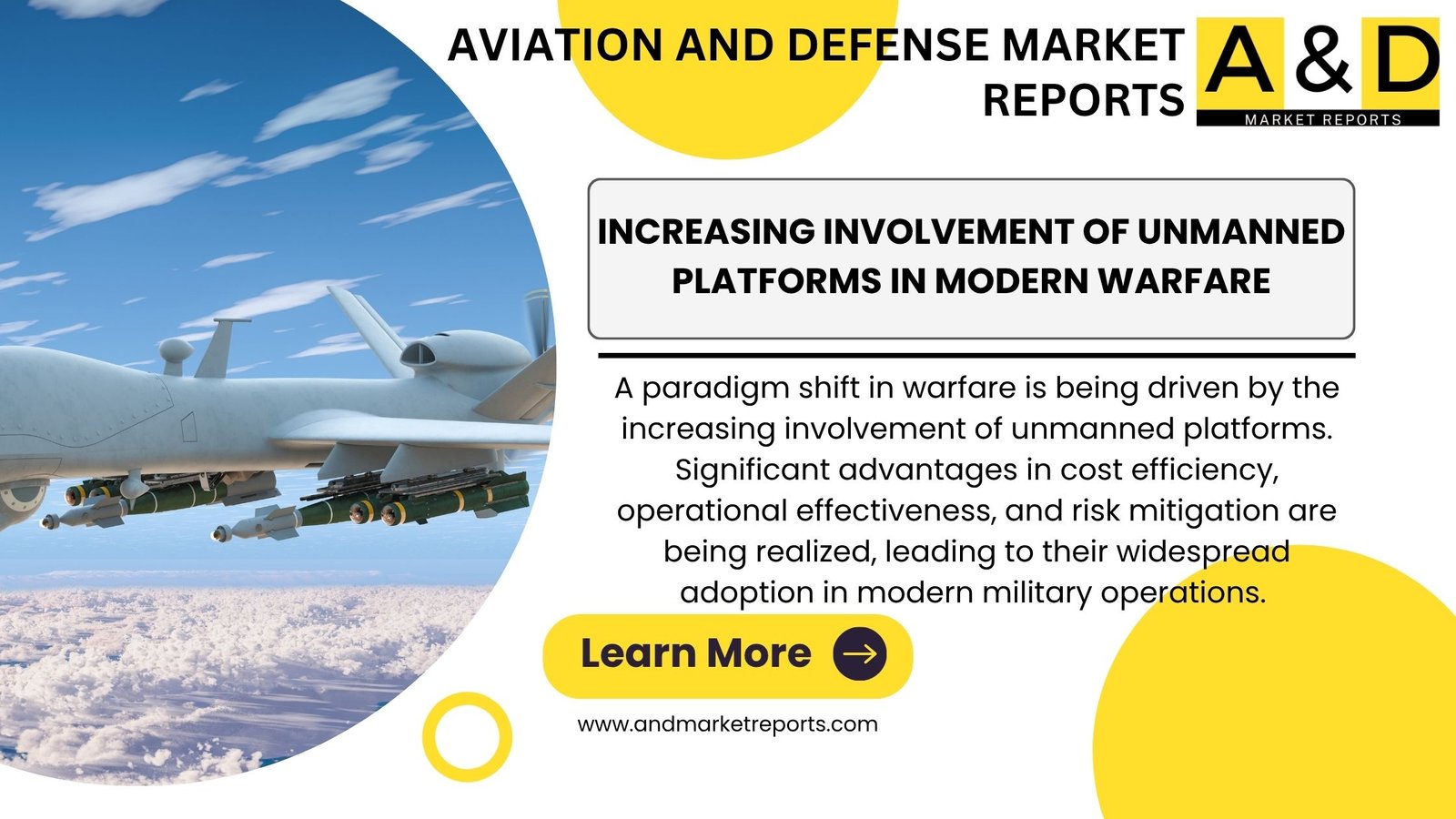
A paradigm shift in warfare is being driven by the increasing involvement of unmanned platforms. Significant advantages in cost efficiency, operational effectiveness, and risk mitigation are being realized, leading to their widespread adoption in modern military operations. In recent times, the focus has evolved from simple remote operation to sophisticated autonomous swarms and integrated human-machine teaming (MUM-T).
At the same time, challenges related to ethics, technology, and proliferation are being introduced. Effective governance frameworks and regulatory mechanisms will be required to ensure responsible deployment.
While challenges in electronic warfare and ethical governance persist, the emergence of ‘attritable’ technology—platforms designed for high-volume, low-cost loss—has fundamentally inverted the economics of defense. As AI-driven ‘Edge’ processing begins to bypass traditional jamming, the ability to produce and deploy these systems at scale will determine the winners of future conflicts. The era of the single, exquisite, and expensive platform is yielding to a future defined by the mass, speed, and intelligence of the unmanned collective.
Looking ahead, warfare is expected to be defined by the integration of manned and unmanned systems, where human decision-making is supported by intelligent technologies. In this evolving environment, strategic adaptability, technological advancement, and forward-looking capabilities will be critical determinants of success.