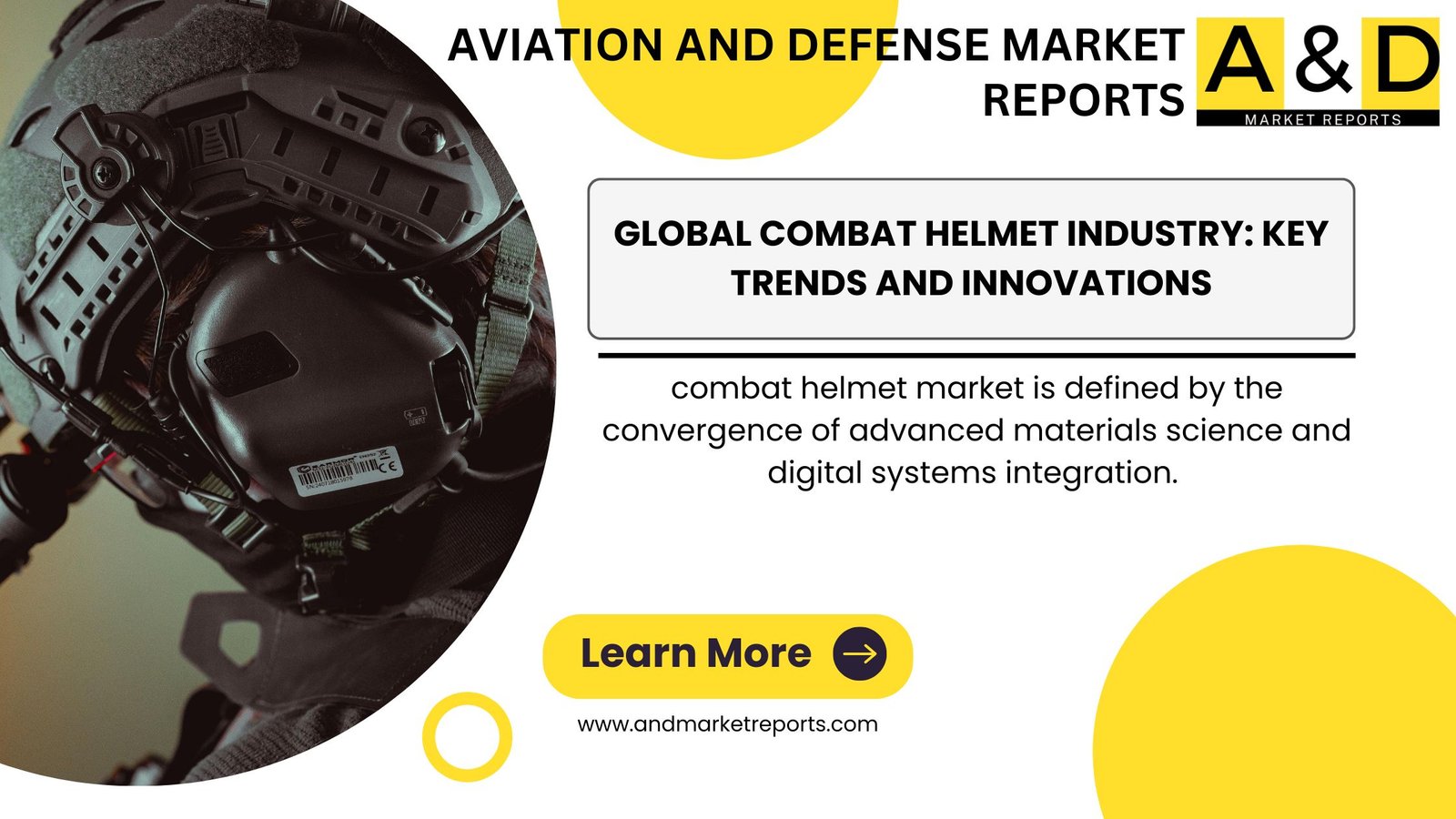

Evolution of Combat Helmet Design in Modern Warfare
The global combat helmet industry has undergone a substantial transformation as military forces adapt to modern battlefield requirements. Traditional steel helmets have been replaced by advanced composite-based designs that offer superior protection while reducing overall weight.
The evolution of combat helmets reflects a shift toward multi-functional equipment that integrates protection, communication, and situational awareness. Modern helmets are no longer passive protective gear; they are active components of a soldier’s combat system. This transformation has been driven by increasing threats from ballistic projectiles, fragmentation, and blast impacts, leading to continuous improvements in materials and engineering techniques.
Rising Adoption of Advanced Composite Materials
One of the most significant trends shaping the combat helmet industry is the widespread use of advanced composite materials such as aramid fibers, ultra-high-molecular-weight polyethylene (UHMWPE), and hybrid laminates. These materials provide high strength-to-weight ratios, enabling helmets to deliver enhanced ballistic resistance without adding excessive bulk.
Manufacturers focus on optimizing fiber orientation and layering techniques to maximize energy absorption during impact. The integration of thermoplastic composites has also improved durability and resistance to environmental stress. As a result, modern combat helmets achieve higher levels of protection while maintaining comfort for extended use in diverse operational conditions. The transition towards 100% UHMWPE shells is accelerating, replacing legacy Kevlar designs to achieve a critical 15-20% weight reduction necessary to offset the burden of integrated electronics.
Integration of Smart Technologies in Helmet Systems
The incorporation of smart technologies represents a major innovation within the combat helmet market. Helmets are increasingly equipped with integrated communication systems, night vision compatibility, augmented reality displays, and sensor-based monitoring systems. The defining technological leap of the mid-2020s is the integration with systems like the US Army’s Integrated Visual Augmentation System (IVAS), which projects navigational data, thermal imaging, and wireless weapon sights directly onto the visor. These technologies enable real-time data exchange between soldiers and command units, enhancing situational awareness and operational efficiency. Embedded sensors can track vital signs, detect head injuries, and provide alerts in critical situations. The convergence of electronics and protective equipment has turned combat helmets into advanced digital platforms that support network-centric warfare strategies.
Focus on Lightweight and Ergonomic Designs
Reducing weight without compromising protection remains a central objective in combat helmet development. Prolonged missions require helmets that minimize fatigue and strain on the wearer. Manufacturers are investing in ergonomic design principles, including improved weight distribution, adjustable suspension systems, and enhanced padding configurations.
Ventilation systems are also being incorporated to improve airflow and thermal comfort in extreme climates. These advancements ensure that soldiers can maintain performance levels over extended periods while wearing protective headgear.
Growing Demand for Modular Helmet Systems
Modularity has become a defining feature in modern combat helmet designs. Military forces require equipment that can be customized based on mission-specific needs. Modular helmet systems allow the attachment of accessories such as visors, mandibles, communication headsets, and lighting systems. This flexibility enables rapid adaptation to different combat scenarios, including urban warfare, reconnaissance, and special operations. The ability to upgrade components without replacing the entire helmet extends product lifecycle and enhances cost efficiency for defense organizations.
Enhanced Ballistic and Impact Protection Standards
The increasing complexity of battlefield threats has led to stricter performance standards for combat helmets. Modern helmets are designed to withstand high-velocity ballistic impacts, blunt force trauma, and explosive shockwaves. With the rising prevalence of Traumatic Brain Injury (TBI) from artillery and IED blasts, new standards prioritize overpressure mitigation as much as ballistic penetration. Testing protocols have become more rigorous, focusing on multi-hit capability and resistance to fragmentation.
Innovations in material science have enabled helmets to provide higher levels of protection while maintaining manageable weight. Continuous research efforts aim to further improve impact resistance and reduce the risk of traumatic brain injuries among soldiers.
Adoption of Additive Manufacturing Techniques
Additive manufacturing, commonly known as 3D printing, is emerging as a transformative technology in the combat helmet industry. This approach allows for rapid prototyping, customization, and efficient production of complex helmet structures. Currently, 3D printing is heavily utilized to create custom lattice-structured interior padding that absorbs impact energy far more effectively than traditional foam foams, while also significantly improving ventilation. Manufacturers can design helmets tailored to individual head shapes, improving fit and comfort. Additive manufacturing also reduces material waste and shortens production cycles, contributing to cost-effective manufacturing processes. The ability to create intricate internal geometries enhances energy absorption capabilities and overall performance.
Emphasis on Soldier-Centric Design Approaches
The shift toward soldier-centric design has influenced the development of combat helmets. Feedback from military personnel plays a crucial role in refining helmet features and functionality. Manufacturers prioritize user experience by addressing issues such as pressure points, compatibility with other gear, and ease of adjustment.
This approach ensures that helmets meet the practical needs of soldiers in real-world combat environments. Continuous collaboration between defense agencies and manufacturers drives innovation and improves product effectiveness.
Expansion of Global Defense Budgets and Procurement Programs
Rising defense expenditures across various regions have significantly contributed to the growth of the combat helmet market. Governments are investing in advanced personal protective equipment to enhance soldier safety and combat readiness. Procurement programs focus on replacing outdated equipment with modern helmet systems that incorporate advanced materials and technologies. Emerging economies are also increasing investments in military modernization, creating new opportunities for helmet manufacturers. This trend supports sustained market expansion and technological advancement.
Development of Integrated Head Protection Systems
Combat helmets are increasingly being developed as part of integrated head protection systems that include facial protection, hearing protection, and respiratory support. . The Integrated Head Protection System (IHPS) fielded by the US military serves as the benchmark, offering scalable protection levels including bolt-less retention and attachable maxillofacial shields. These systems provide comprehensive defense against multiple threats encountered on the battlefield. The integration of different protective components into a unified system improves overall efficiency and reduces the burden of carrying separate equipment. This holistic approach aligns with modern military strategies that emphasize multifunctional gear.
Sustainability and Material Innovation in Manufacturing
Sustainability considerations are gaining importance in the combat helmet industry. Manufacturers are exploring eco-friendly materials and production methods to reduce environmental impact. The use of recyclable composites and energy-efficient manufacturing processes is becoming more prevalent. Research efforts focus on developing materials that maintain high performance while minimizing ecological footprint. Sustainable practices not only address environmental concerns but also enhance the long-term viability of manufacturing operations.
Key Players and Competitive Landscape
Prominent companies in the sector include Gentex Corporation, , Galvion (formerly Revision Military), BAE Systems, ArmorSource, Team Wendy (Avon Protection) and MKU Limited among others. These organizations compete through continuous research and development in materials, integration, and system performance.
Strategic partnerships with defense ministries and participation in international programs strengthen market positions. Focus on innovation in modularity, weight reduction, and multi-threat protection differentiates leaders in this specialized industry
Future Outlook of the Combat Helmet Industry
The future of the combat helmet industry is defined by continuous innovation and technological integration. Advancements in material science, digital technologies, and manufacturing processes will drive the development of next-generation helmets. The focus will remain on enhancing protection, improving comfort, and integrating advanced functionalities. As modern warfare evolves, combat helmets will play a critical role in ensuring soldier safety and operational effectiveness. Ongoing investments in research and development will sustain growth and enable the industry to meet the challenges of future combat environments.
In conclusion, the 2026 combat helmet market is defined by the convergence of advanced materials science and digital systems integration. The industry has moved decisively past legacy aramid designs, adopting Ultra-High-Molecular-Weight Polyethylene (UHMWPE) and 3D-printed lattice suspensions to mitigate both ballistic penetration and concussive overpressure (TBI) while keeping weight manageable. As infantry doctrines increasingly rely on Augmented Reality (AR) and networked communications, such as the IVAS program, the helmet acts as the foundational power and data hub for the dismounted soldier. Moving forward, the most successful defense contractors will be those who can balance the rigorous demands of multi-hit ballistic survivability with the ergonomic and thermal realities of powering a ‘smart’ combat ecosystem on a soldier’s head.